Venus opposition Neptune synastry
Author: Viktor Balakirev · Published
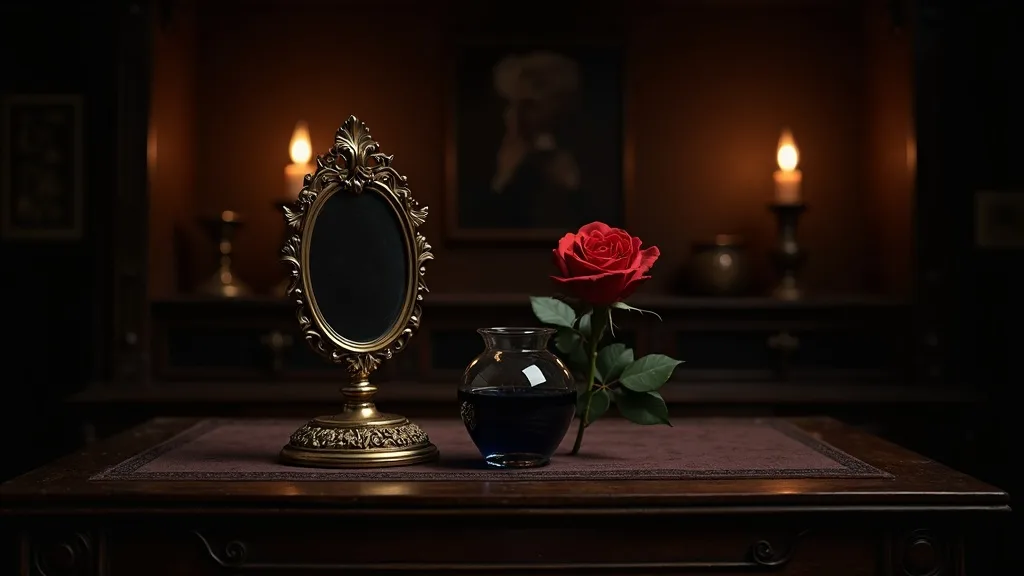
The opposition aspect between one partner's Venus and the other's Neptune is one of the most enigmatic and potentially wounding dynamics in synastry. It does not promise simple romance; it activates deep, often unconscious dynamics of idealization, self-deception, and subsequent disillusionment. This article explores the specific psychological mechanisms triggered by this aspect, drawing on Vronsky's astrological material and the psychoanalytic ideas of Melanie Klein.
Activation Mechanism: Idealization and Projection
According to Vronsky, unfavorable aspects of Venus to Neptune in the natal chart create a 'tendency to self-deception' and 'hazy attachments.' In synastry, this mechanism is amplified: the Neptune partner unconsciously projects onto the other's Venus their unfulfilled fantasies of perfect love, salvation, or spiritual unity. The Venus partner, in turn, can be swept up by this wave of idealization, losing critical perception. Vronsky warns that 'a person can be completely under the influence of their partner' and 'lose their individuality.' This is not mere infatuation but a state where the boundaries between 'I' and 'you' become permeable, leading to psychological fusion.
Psychological Dynamic: Self-Deception and 'Castles in the Air'
Vronsky repeatedly emphasizes that with such aspects, 'a person prefers to build castles in the air, deceive themselves, rather than face the truth.' In synastry, this manifests as a stubborn refusal to see obvious 'red flags' in a partner's behavior. The Venus partner may rationalize coldness, infidelity, or inappropriate actions, attributing them to lofty motives ('he/she is too sensitive,' 'it's because of their artistic nature'). Vronsky links this to 'emotions ruling over reason' and 'delusions connected with love.' The Neptune partner may unconsciously support this illusion, as it feeds their need to be a deity or a victim.
The Shadow of the Aspect: Deception, Betrayal, and 'Parallel Affairs'
Vronsky directly points to 'deception on the part of partners,' 'immorality in intimate life,' and 'parallel love affairs.' It is crucial to understand that this is not always conscious betrayal. Often, it results from Neptune's inability to tolerate the reality of the relationship. The Neptune partner may seek solace in other connections, fantasies, or addictions (alcohol, drugs) to avoid the disappointment of an imperfect union. Vronsky also mentions the 'danger of betrayal, infidelity, self-deception, or deceiving others.' The Venus partner, blinded by idealization, may remain oblivious to these 'parallel' realities for a long time.
Disillusionment and Reparation: A Kleinian Perspective
Melanie Klein, in her work on love, guilt, and reparation, describes how the idealization of an object (the partner) is inevitably followed by disappointment when the object reveals its 'bad' qualities. In the context of Venus-Neptune synastry, the moment the illusion shatters can be extremely painful. Vronsky calls this 'disappointment in ideals.' However, according to Klein, this very disappointment is a chance for psychological growth. If partners can tolerate each other's reality without falling into complete devaluation, they can move toward the stage of 'reparation'—an attempt to restore the relationship's wholeness by acknowledging both its light and shadow sides. Vronsky, though in a different context, mentions a 'tendency to self-sacrifice for the partner' and 'altruism,' which can be a form of such reparation, provided it does not become a new sacrificial illusion.
Practical Takeaways: How Not to Drown in Neptune
- • Recognize the projection. The Venus partner must ask: 'Whom am I actually seeing? A real person or my ideal image?' The Neptune partner must ask: 'Am I using the other as a screen for my fantasies?'
- • Return to the body and reality. Vronsky speaks of 'practicality in life' being 'drowned out by rich fantasy.' It is essential to consciously cultivate practical, everyday aspects of the relationship: shared chores, finances, daily routines. This is an anchor that prevents drifting into 'castles in the air.'
- • Establish boundaries. An opposition is an aspect of tension. It requires dialogue, not fusion. The Venus partner must learn to say 'no' to illusions, and the Neptune partner must learn to say 'no' to the temptation to escape into fog.
- • Accept imperfection. According to Vronsky, the outcome of these aspects is 'disappointment in ideals.' But this disappointment can be the beginning of mature love—one that sees the other as they are, not as one wishes them to be.
Venus opposition Neptune is not a verdict but a challenge. A challenge to see the real person behind the fog of illusion and to build a relationship based not on fantasy, but on authentic, albeit imperfect, intimacy.
Want to see Venus and Neptune aspects in your synastry with a specific person?
Open synastry