Moon sextile Neptune synastry: empathy, illusion, and spiritual bonding
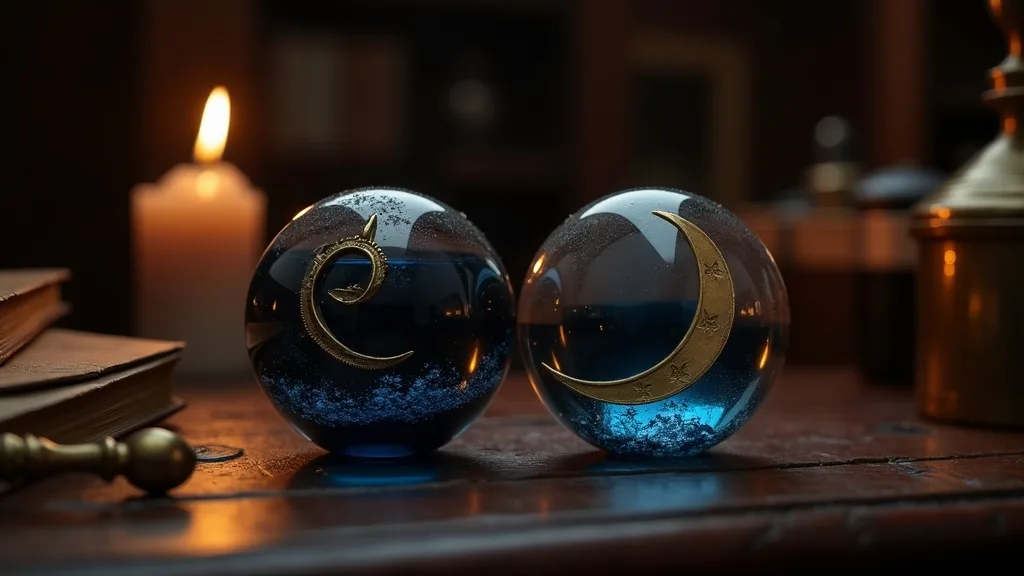
In synastry, the Moon-Neptune aspect is one of the most subtle and mysterious. The sextile (60°) is considered harmonious, but with Neptune, harmony can be deceptive. This aspect does not provide stability — it creates resonance at the subconscious level. Two people begin to sense each other almost telepathically, but the price is blurred personal boundaries.
The mechanism: empathic merging
The Moon governs emotional security, habits, and the need for nurturing. Neptune rules ideals, illusions, and dissolution. In sextile, these energies do not conflict but mutually amplify each other. The Moon person, in contact with the partner's Neptune, loses the ability to distinguish their own feelings from the partner's emotions.
This is a classic case of projective identification (Klein): one partner unconsciously 'deposits' unexpressed emotions into the other, who then experiences them as their own. The result is a feeling of 'soulmate connection', but often at the cost of self-loss.
Idealization and disappointment: the shadow of sextile
The sextile does not create acute crises like an opposition or square. But it quietly erodes reality. The Neptune partner is seen as a 'savior', 'muse', or 'spiritual teacher'. The Moon receives an illusion of unconditional acceptance. However, reality eventually intrudes: the partner turns out to be ordinary, with flaws.
Here lies the main psychological trap: instead of seeing the partner as real, the Moon person may accuse them of 'betraying the ideal'. A cycle emerges: idealization — disappointment — re-idealization. This mirrors codependent patterns where one 'rescues' and the other 'sacrifices'.
Spiritual bond or escape from reality?
At its best, Moon sextile Neptune offers deep empathy and creative inspiration. Partners can engage in art, meditation, or psychology together. They sense each other's moods without words. This is valuable but dangerous if one partner uses the other as an 'emotional container' for unprocessed trauma.
At its worst, the aspect fosters mutual escapism: alcohol, drugs, fantasies of 'great love' that require no action. Neptune is the planet of illusion, and the couple may form an unspoken pact: 'We won't notice problems; we'll just feel.'
How to distinguish healthy from toxic bonding
The key criterion is boundary preservation. If after interacting with your partner you feel drained, anxious, or unsure of your own desires, this signals fusion. A healthy sextile brings lightness and inspiration but does not strip you of your will.
Recommendation: practice 'emotional hygiene' — after meetings, ask yourself: 'Is this my feeling or theirs?' It is also vital to maintain separate interests and social circles to avoid dissolving into the couple.
Conclusion
Moon sextile Neptune is an aspect of high spiritual sensitivity, but it demands awareness. Without it, it becomes 'sweet poison': offering moments of unity while destroying the ability to see reality. For mature individuals, it can be a source of profound empathy and creativity. For the immature, it is a trap of codependency.
Remember: Neptune cannot tolerate harsh reality. If you want to build sustainable relationships, this aspect must be balanced by earthy elements (e.g., a strong Venus or Saturn in synastry). Otherwise, you risk loving not a person, but your fantasy of them.
Want to see Moon and Neptune aspects in your synastry with a specific person?
Open synastry